AIACO Provides Data For Clinical Decision Making

From Hindsight to Foresight: Moving Beyond Claims-Based Triggers

For decades, most ACOs have relied on retrospective claims data to drive population health decisions. But claims arrive weeks or months after the event, offering insight only after care gaps have already widened. Artificial intelligence transforms this paradigm. By ingesting real-time behavioral, clinical, and contextual signals—from refill delays to missed follow-ups—AIACO surfaces patient needs while there’s still time to act. This shift enables clinical leaders to move from reactive firefighting to proactive intervention. For CEOs and ACO executives, this is not merely a technical upgrade; it is a strategic imperative. The difference between predicting risk versus reacting to risk translates directly to patient lives, quality scores, and financial performance.
 
From Static Claims to Active Context
  • Retrospective Data Delays Action Claims data lags behind reality—often by 30 to 90 days. This delay means care teams are always catching up. AIACO flips this model by using real-time input streams to detect risk patterns as they emerge, giving care teams a chance to intervene while there's still time to change outcomes.

  • Behavioral Signals Add Clinical Clarity Clinical decisions can be shaped more effectively when AIACO integrates soft behavioral data—such as hesitation to refill, tone of voice during calls, or appointment deferrals—into the risk stratification process. These signals bring emotional and logistical barriers to the surface, making the invisible visible.

  • Predictive Models Guide Resource Allocation AI-driven prediction engines allow ACOs to deploy limited clinical resources with surgical precision. By identifying which patients are most likely to lapse into nonadherence, miss a screening, or face rising risk, leaders can prioritize engagement based on impact rather than just compliance.

Unified Data Fabric: Solving the EHR Fragmentation Problem

One of the most formidable challenges in value-based care is data fragmentation. ACOs struggle with siloed EHR systems that prevent a unified understanding of patient journeys. AIACO solves this by creating a semantic fabric—able to ingest, align, and normalize data across platforms, providers, and formats. This allows care teams to see the patient as a whole, not as a scatterplot of records. By dissolving data silos, AIACO not only enhances clinical decision-making—it lays the foundation for whole-person care. For CEOs navigating operational complexity, this is the infrastructure that makes innovation sustainable and scalable.
 
Building a Unified View of the Patient
  • Cross-EHR Data Normalization AIACO tools standardize disparate coding structures and nomenclature across EHR platforms. Diagnoses, medication histories, and lab results are translated into a common language, enabling universal analytics and insight generation—regardless of the originating system.

  • Real-Time Synchronicity Between Systems By operating on streaming data inputs, AIACO creates a live, continuously updated view of patient records. This synchronicity eliminates the blind spots caused by asynchronous or manually reconciled EHR data, giving providers a real-time clinical cockpit.

  • Patient-Centric Data Alignment AIACO reorganizes incoming data not just around episodes of care, but around the patient’s story. This contextual understanding lets teams anticipate care needs based on history, barriers, and behaviors—rather than simply responding to isolated clinical events.

Precision Risk Modeling: Beyond the Generalized Patient Profile

Traditional risk models, often based on broad actuarial tables or generalized clinical indicators, fail to capture the complexity of individual patients. AIACO allows ACOs to integrate specialty-specific risk engines—tailored to populations like diabetics, ESRD patients, or those with comorbid behavioral conditions. These models not only detect heightened risk sooner, but also offer care teams granular insight into *why* a patient is likely to deteriorate. For executive leadership, this precision creates cost-effective targeting strategies that outperform blanket outreach models and enhance care delivery for the patients who need it most.
 
Targeting with Precision, Not Assumption
  • Specialty-Aware Risk Engines AIACO platforms can run disease-specific models in parallel—each tuned to detect progression risk factors based on thousands of unique clinical and behavioral variables. This eliminates the “one-size-fits-all” pitfall of traditional population health scoring.

  • Explainable Risk Scores for Clinical Use Modern AIACO does more than assign a risk score—it explains the top contributing factors in plain language. This enables providers to act on insight immediately rather than spend valuable time deciphering black-box metrics.

  • Proactive Engagement Triggers With granular scoring in place, AIACO sets up early intervention flags—before hospitalization risk spikes. These triggers feed into workflows automatically, assigning tasks, initiating outreach, or scheduling follow-ups dynamically based on predicted deterioration.

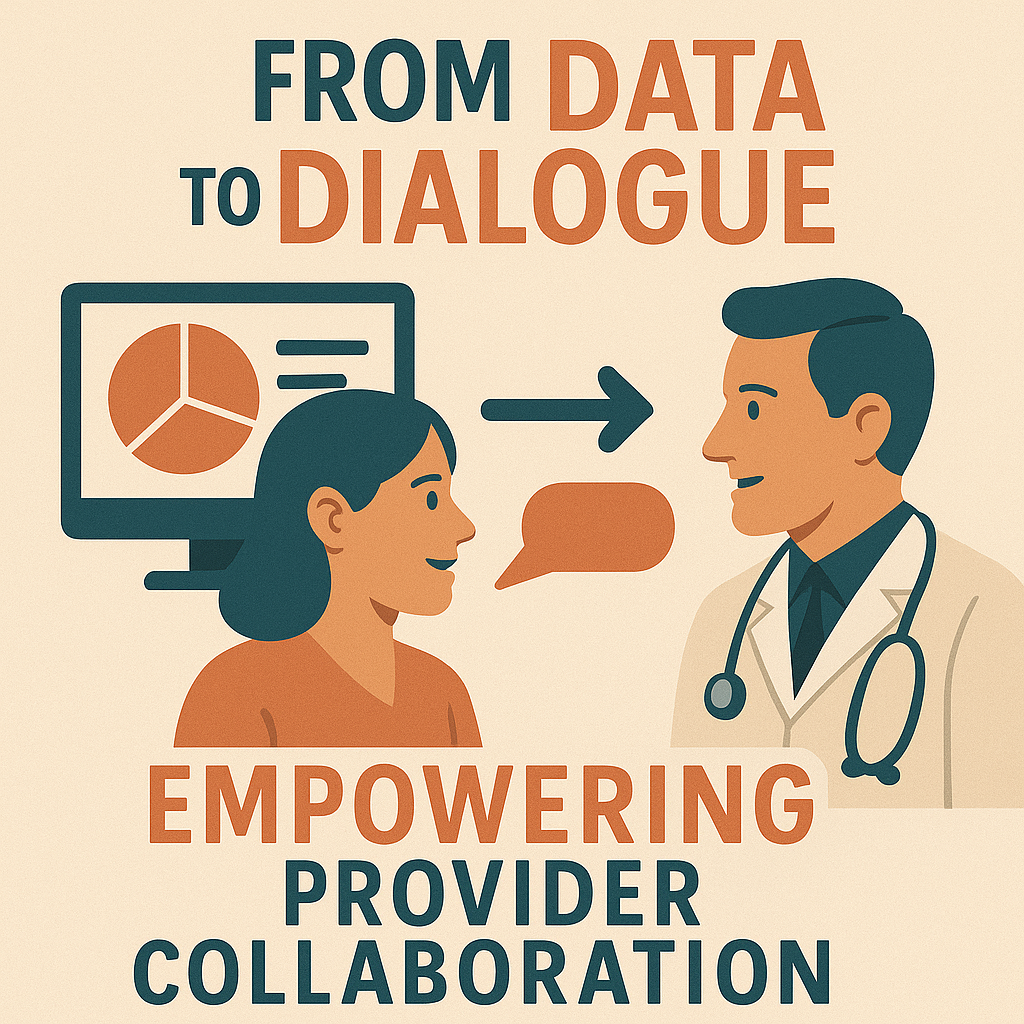
From Data to Dialogue: Empowering Provider Collaboration

One of the most underleveraged opportunities in ACOs is provider alignment. Too often, care teams operate in silos—each with fragmented views of patient journeys, disconnected metrics, and unclear priorities. AIACO creates the connective tissue. By sharing real-time performance metrics, predictive flags, and patient context across care teams, AIACO enables informed, coordinated action. CEOs and ACO administrators can finally move from top-down mandates to bottom-up synchronization, empowering clinicians with the right insight at the right time. The result? Fewer missed opportunities, smoother transitions of care, and a collaborative ecosystem that naturally supports quality improvement.
 
Synchronizing Teams with Shared Truth
  • Real-Time Provider Dashboards AI-powered dashboards deliver live metrics on care gaps, risk indicators, and patient events. This keeps providers informed without waiting for retrospective reporting cycles—improving response speed and accountability across the network.

  • Context-Rich Patient Snapshots Beyond vitals and labs, AIACO shares behavioral context—missed calls, refill patterns, even family caregiving stress—providing a 360° view of the patient that enhances empathy and decision-making during handoffs or transitions.

  • Closed-Loop Referral and Feedback AIACO tracks not just that a referral was made—but whether it was completed, acted on, and followed through. This closes the loop, ensuring that care recommendations lead to real-world actions and measurable outcomes.

Compassion at Scale: Human-Level Engagement Powered by AI

Too often, ACOs fall into the trap of generic engagement—automated robocalls, templated texts, or patient portals with no soul. True patient engagement requires more than messaging—it requires meaning. AIACO’s design philosophy answers this directly. By detecting behavioral signals (like voice tone, hesitations, or even silence), AIACO listens in a human way. From this data, it delivers messages that feel like care, not code. It doesn’t just remind patients—it reassures them. At the leadership level, this represents a new kind of outreach model—where scale and sincerity are not in conflict, but in communion.
 
Engagement That Feels Like Presence
  • Emotionally Tuned AI Messaging Using sentiment and conversational analysis, AIACO generates messages tailored to how a patient feels—not just what they missed. It can gently reassure an anxious patient, affirm a discouraged one, or offer clarity to someone confused. This is care that feels felt.

  • Behavioral Listening as a Signal Stream Every silence, skipped appointment, or delayed refill holds meaning. AIACO listens to these as signal—not noise—and treats them as actionable clues. These become triggers for timely, compassionate interventions that reconnect patients with their care journey.

  • Personalization Without Manual Burden AIACO enables hyper-personalized engagement at scale—without overwhelming staff. By automating personalization through intelligent templates, care teams can deliver thousands of unique touches that still feel intimate and intentional to each patient.